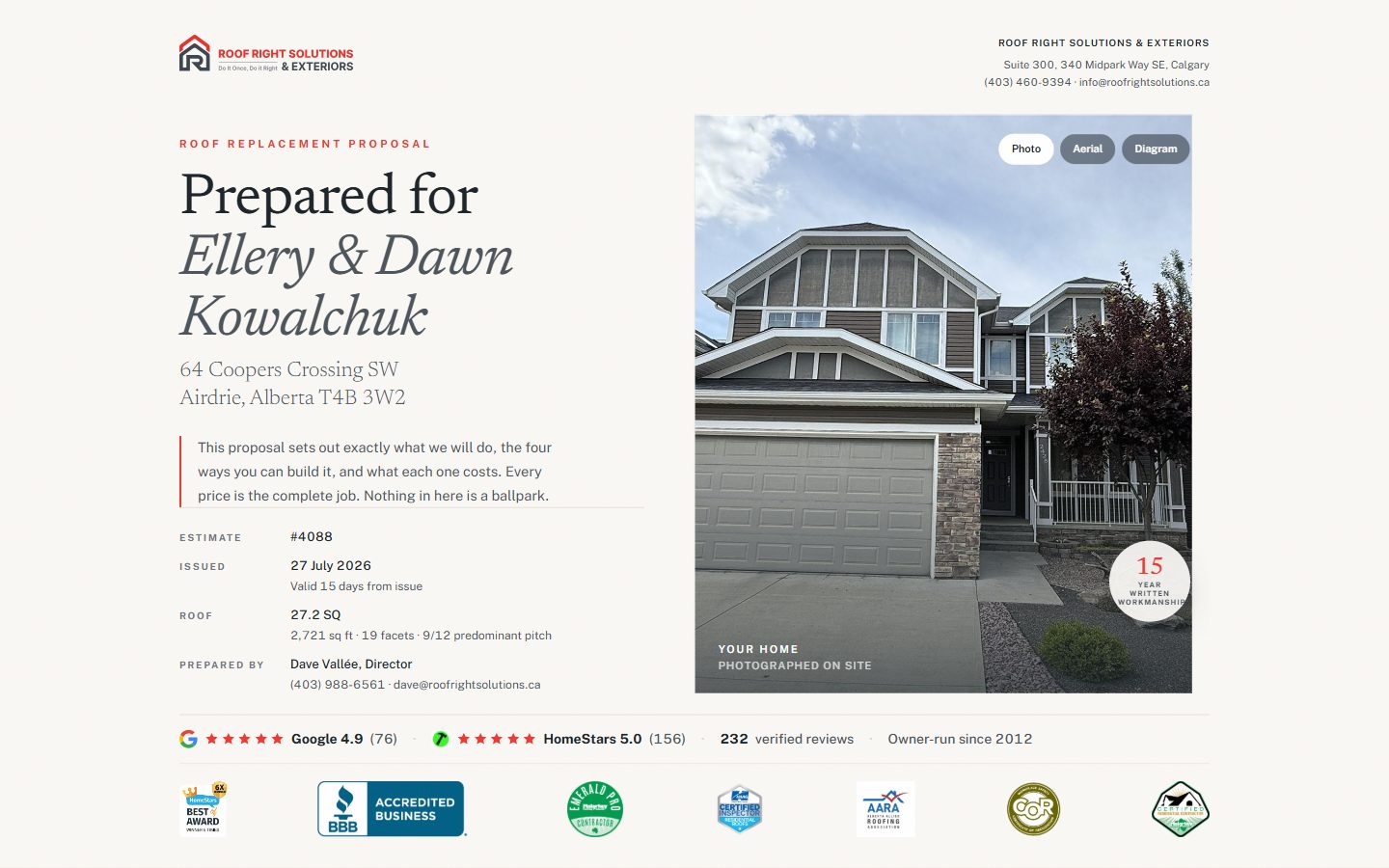
The Dossier
Newsreader + Public Sans
Warm paper, hairline rules, no cards. Options read as a price ledger. Reads as a serious document.
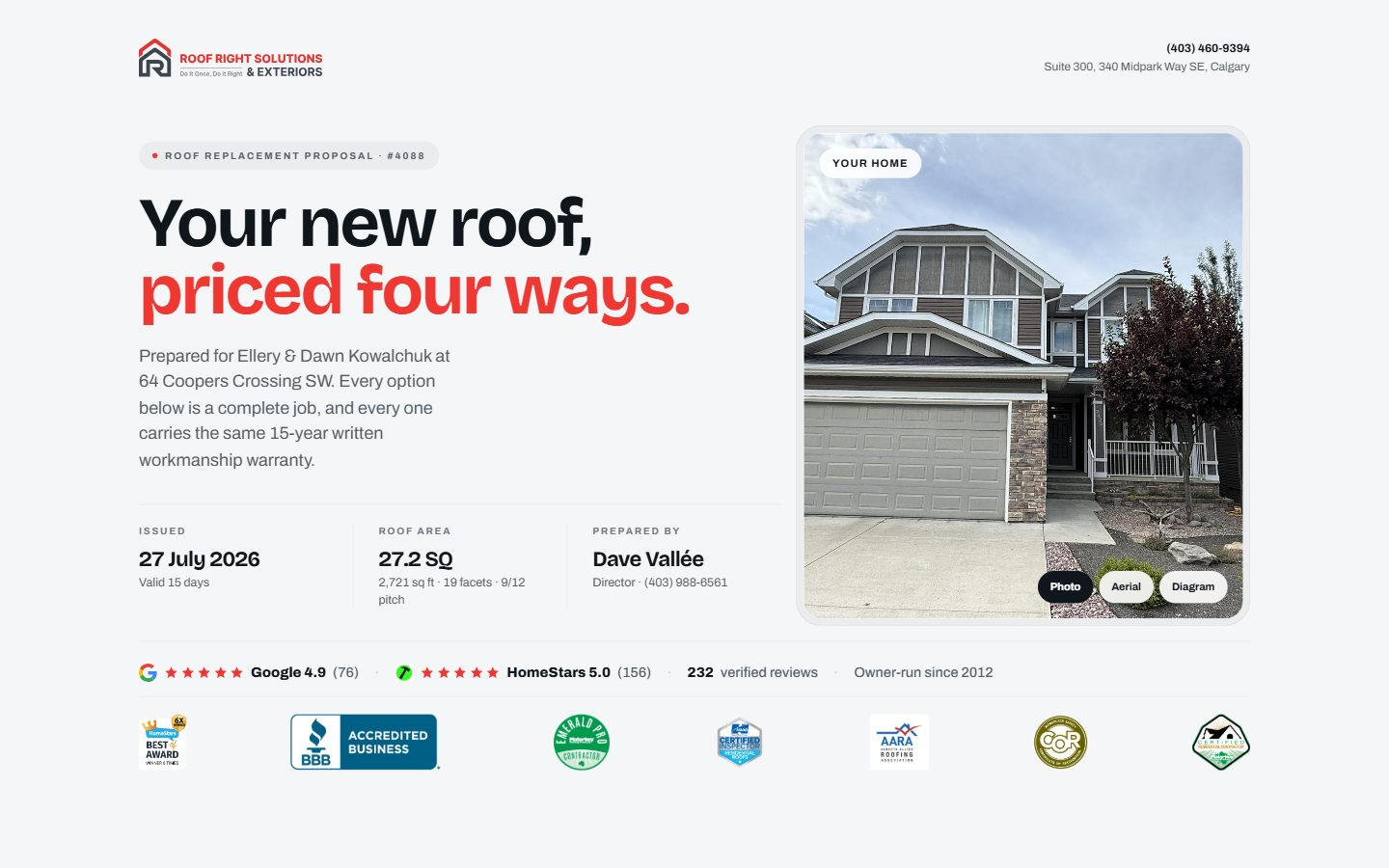
The Spec
Bricolage Grotesque + Archivo
Cool near-white, product cards, one dark section carrying the project description. Reads as a product page.
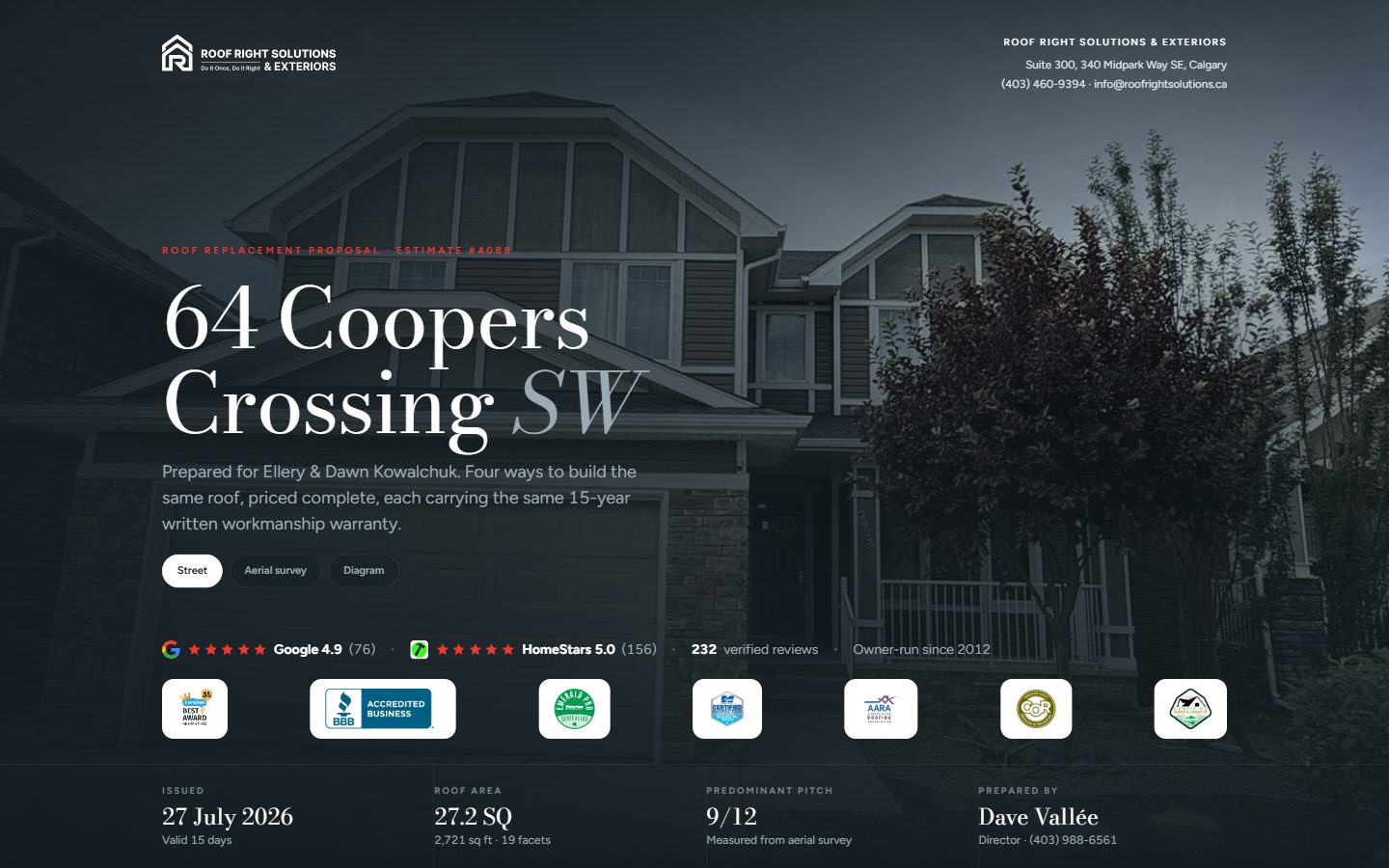
The Site Visit
Inter, weight 800 · the live site's own system
Night ground, the house full-bleed behind the title, option rows that expand. Reads as a monograph. Re-typeset to the site's own Inter (D314), so C and D-3 now differ by LAYOUT alone. Its PDF keeps the type on a pale sheet: a dark Letter page is unreadable photocopied.
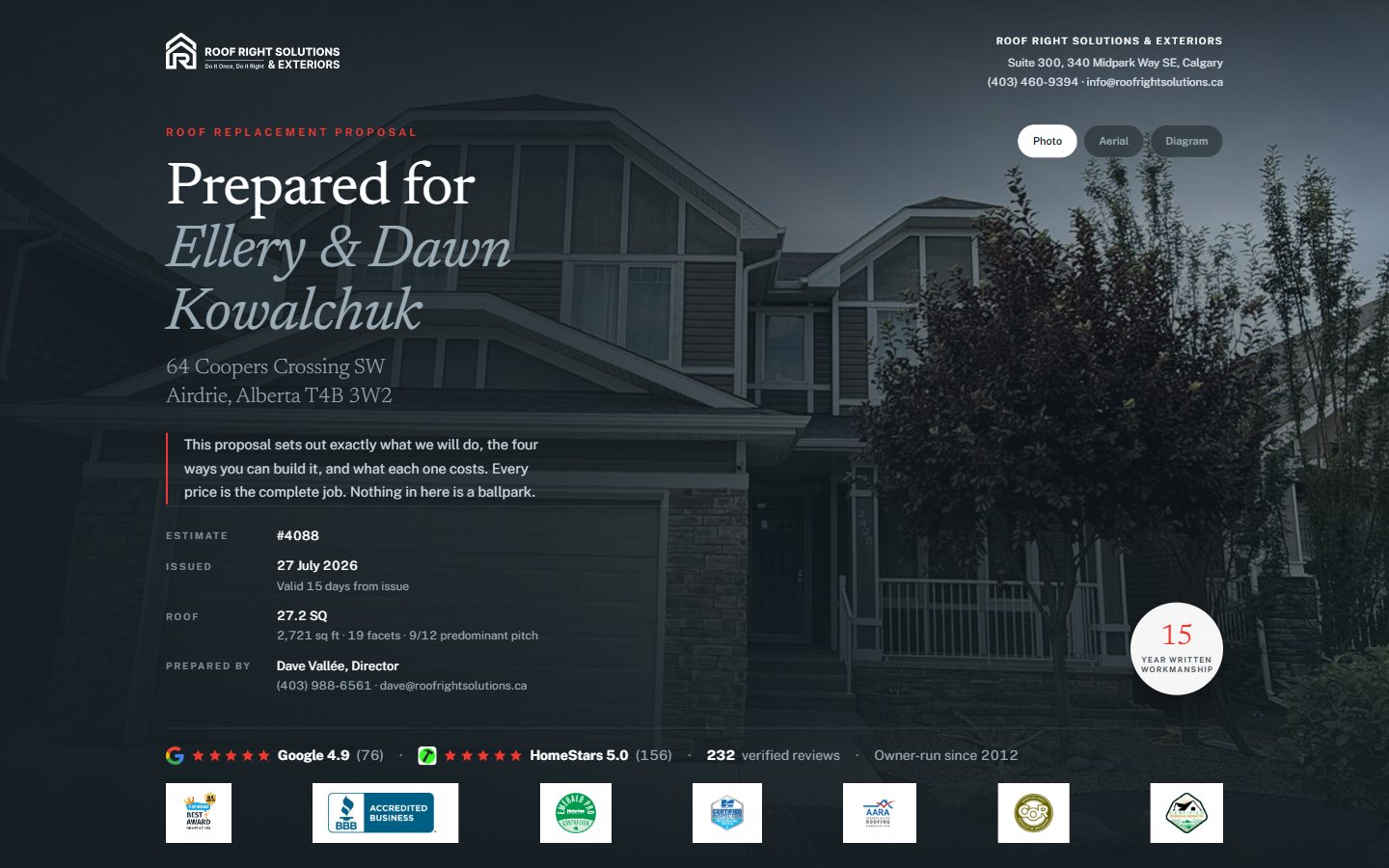
The Hybrid · paper
Newsreader + Public Sans
Your assembly: A's title layout, C's full-bleed photography, B's option cards and authorize page. On A's warm paper ground.
Cover Split panel · Full-bleed · Editorial
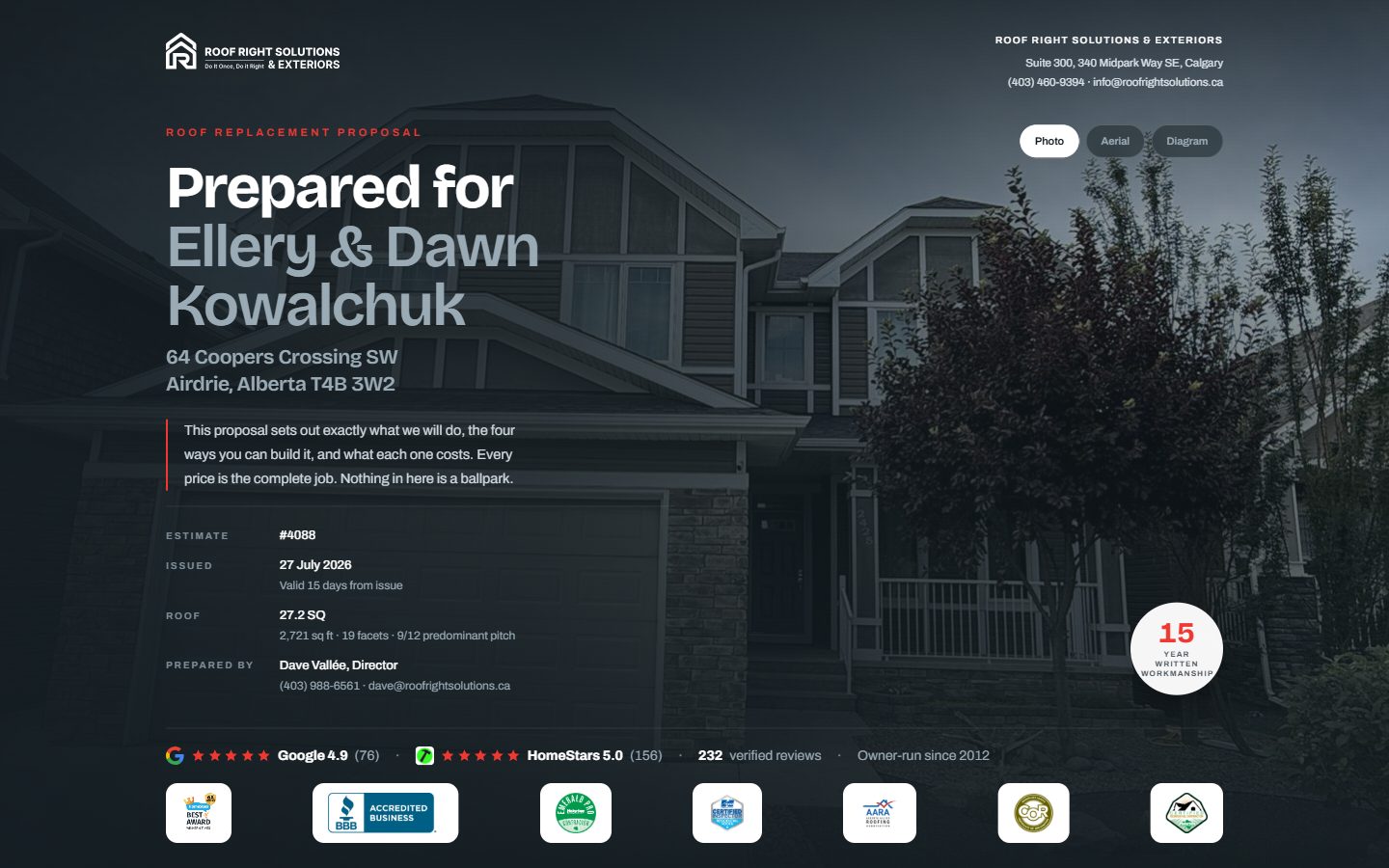
The Hybrid · spec
Bricolage Grotesque + Archivo
The same page as D-1 on B's cool ground and type. One file, three themes, so they cannot drift apart.
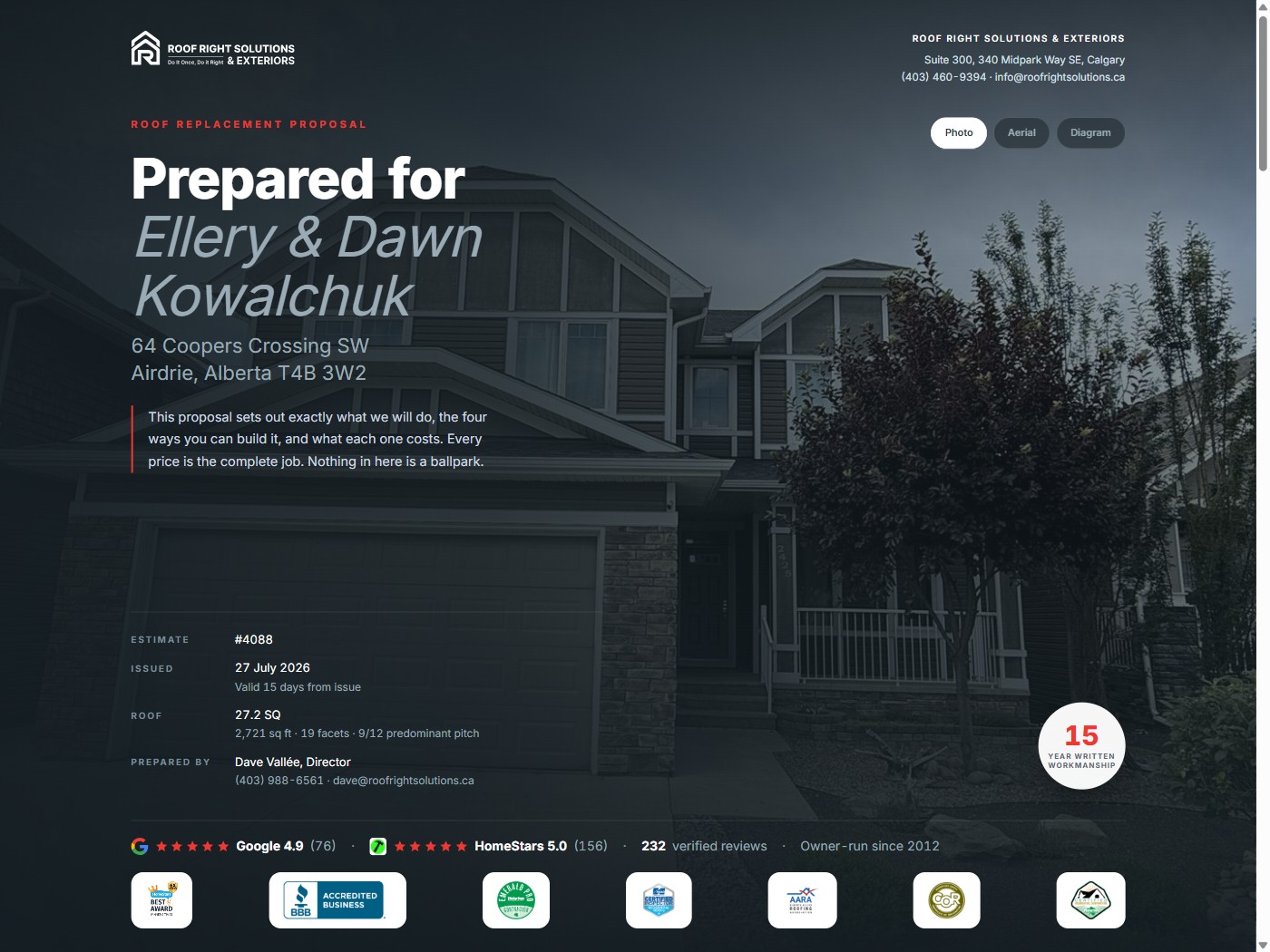
The Hybrid · the website
Inter, weight 800 · the live site's own system
The same page again, typeset in exactly what roofrightsolutions.ca uses: one family throughout, its identity carried by weight and tracking rather than a second face. Colours are the site's own tokens.
Cover Split panel · Full-bleed · Editorial